
Spain has restricted its skies to American military aircraft taking part in attacks on Iran, according to Madrid's defence minister Margarita Robles.
Official Stance
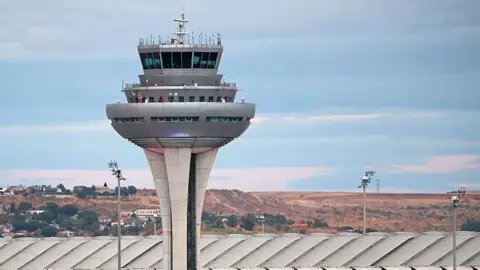
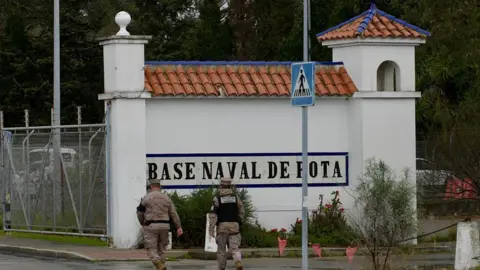
"We refuse to permit the use of Moron and Rota for any activities related to the war in Iran," the minister declared, adding that Spain had "expressed this stance to the United States from the beginning."
Foreign Minister José Manuel Albares explained the purpose of the move was to "refrain from measures that could fuel an expansion in this war."
American Reaction
The US did not immediately comment, but US President Trump has previously threatened to impose a complete economic blockade on Spain over its objection to the Iran war.
Sánchez's Opposition
Ever since the outbreak of the hostilities in late February, the Prime Minister Pedro Sánchez has been one of the most vocal opponents of the military actions, describing them as "reckless" and "illegal."
Earlier in March, the Prime Minister stated Spain had denied the US use of the two jointly run military bases at Rota and Morón, located in Andalusia.
"Ours is an independent state that refuses to be involved in unlawful conflicts," he said.
He also announced that "any proposed route that entailed operations connected to the campaign in Iran were rejected - all of them, including those of refuelling aircraft."
Operational Impact
Certain American aircraft participating in missions in Iran are based at the Fairford air base in the UK, subsequent to London's approval to a appeal from the US.
Aircraft launching from there will be compelled to avoid much of the Iberian peninsula - either by flying over the eastern Atlantic or through France.
Sources state that planes would be permitted to transit through Spain's skies or land at the bases only for emergency.
Broader Context
In a national broadcast, the PM Sánchez discussed other conflicts and said the Spanish government's position could be summed up as "opposed to conflict."
Subsequently, the embassy of Iran in Spain noted Tehran would be open to proposals from Madrid concerning passage through the Strait of Hormuz because Spain was "a supporter of international law."
Market Effects
Approximately 20% of the world's oil supply normally passes through the key maritime channel between Iran and the tip of the Arabian peninsula.
Recently, the threat of strikes by Iranian drones, missiles has kept it effectively closed, sending oil prices shooting.


